
On Tap
Fall 2021听触 叠测听Rachel Williams 麻豆精品 S�15聽 麻豆精品 S�20MA
On any given day at UCF, students can be found in labs conducting chemistry experiments. Now, that includes brewing beer.
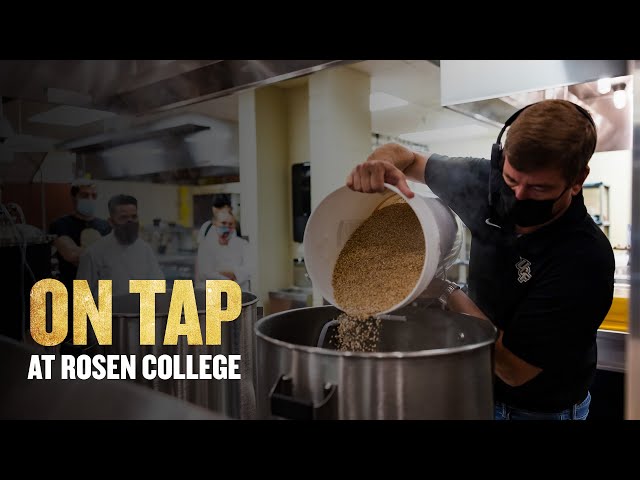
Students have a chance to learn聽about the ancient craft thanks聽to two brand-new stainless steel聽15-gallon Blichmann kettles聽and a fermenter installed at聽the Rosen College of Hospitality聽Management this semester. They 麻豆精品 S檝e聽steeped grain, combined it with yeast,聽and aerated the mixture so that it聽fermented and turned into beer over聽a matter of weeks.
Even though this聽process is聽thousands of years old, these future聽brewmasters are learning about the聽process to understand beer 麻豆精品 S檚 place聽in the modern world of hospitality聽management.
麻豆精品 S淎s long as humans have been聽living in small groups, they 麻豆精品 S檝e been聽brewing in some capacity, 麻豆精品 S� says聽chef Jonathan Judy, an associate聽instructor at the Rosen College聽of Hospitality Management who聽teaches the course Quality Brewing聽and Fine Beer.
It 麻豆精品 S檚 as much a part of American聽history as the Mayflower itself 麻豆精品 S斅爓hich landed near Plymouth Rock聽in part because the ship was running聽out of its beer supply, which was safer聽than its drinking water.
Fast forward to 2021, and beer聽is a main ingredient of American聽culture. Last year alone the craft beer聽industry contributed $62.1 billion and聽more than 400,000 jobs to the U.S.聽economy, according to the Brewers聽Association.
麻豆精品 S淲hat we 麻豆精品 S檙e seeing now in the聽industry is food and beer pairings are聽rising to the same level as food and聽wine pairings, 麻豆精品 S� Judy says.
That popularity is why students are聽learning about beer in their education聽to become hospitality managers. In聽his class, Judy takes students through聽the process 麻豆精品 S� beginning with beer 麻豆精品 S檚聽origins to brewing a batch themselves聽that is then used for class tastings.
Here are some insights Judy聽learned about beer during his career.
Change is Brewing in the Industry
Brewing has been a leading聽manufacturing industry in America聽since the early 1900s. It wasn 麻豆精品 S檛聽until the 麻豆精品 S�70s and 麻豆精品 S�80s that the聽niche market of craft beer began in聽people 麻豆精品 S檚 garages. In the last 15 years,聽Judy says we 麻豆精品 S檝e seen a significant聽change in the demand for craft beer聽because consumers are increasingly聽interested in quality and supporting聽local. It 麻豆精品 S檚 caught the attention of the聽big national brewers that recognize聽craft brewers have come after the聽market share.
Rosen Sets the Standard
UCF students learn from industry聽professionals in their education to聽become hospitality managers. Take聽Judy, who starting cooking as an聽apprentice in 1990 at 16 years old,聽was a sous chef at a restaurant and聽brewery in Winter Park, and聽over time worked his way up to聽executive chef. He 麻豆精品 S檚 been a hobbyist聽brewer since the 麻豆精品 S�90s, and recently聽became a level-one Cicerone 麻豆精品 S� a聽beer certification similar to the聽sommelier certification in wine.
麻豆精品 S淲hat I 麻豆精品 S檝e found is that brewing聽is just like cooking, 麻豆精品 S� says Judy. 麻豆精品 S淚t 麻豆精品 S檚聽a transformative process, and I 麻豆精品 S檝e聽always found it fascinating. 麻豆精品 S�
Passing the Taste Test
The craft of making beer means being聽creative with it, but within reason.聽Beer is made of just four ingredients聽 麻豆精品 S� grain, hops, yeast and water. 麻豆精品 S淚t 麻豆精品 S檚聽fascinating how you can take those聽four ingredients and make something聽different every time, 麻豆精品 S� Judy says. A聽good beer should have a refreshing聽flavor, a pleasant aftertaste and a taste聽that aligns with its style, he says.
Finding the Right Beer
Judy says the best moments in class聽are when he witnesses the 麻豆精品 S渁ha! 麻豆精品 S澛爉oment for his students. 麻豆精品 S淚 麻豆精品 S檝e had聽students who didn 麻豆精品 S檛 like beer or聽thought they wouldn 麻豆精品 S檛 enjoy it but聽then they do. I think for most people聽who don 麻豆精品 S檛 like beer, it 麻豆精品 S檚 because they聽haven 麻豆精品 S檛 found the one for them yet, 麻豆精品 S澛爃e says. When trying to find the right聽beer, Judy says consider what flavor聽profiles you like in food. For those聽who like bitter flavors, Judy suggests trying an India Pale Ale (IPA). For聽coffee lovers, try stouts. For those聽who want something light, Judy聽suggests a lager, wheat ale or Belgian-style聽white ale.
Making the Grade
Reinheitsgebot is a German term that聽marks the standard as the country 麻豆精品 S檚聽beer purity law. In place since 1516,聽the law requires that nothing other聽than barley, hops, yeast and water be聽used to produce German beer. 麻豆精品 S淭hat 麻豆精品 S檚聽why German beer tends to have聽much less going on than Belgium聽beer, for example, which is made right聽next door but not constrained to the聽same purity law, 麻豆精品 S� Judy says.聽UCF聽students this semester brewed a beer聽in line with the聽Reinheitsgebot law.
Well-Rounded Education
Quality Brewing and Fine Beer聽is one of 10 courses that students聽can take to earn a certificate in聽beverage management that started聽this semester. Courses include聽supply chain and logistics, law and聽management to tasting classes with聽beer and wine, which is taught in the聽Anheuser-Busch Beer & Wine Lab at聽Rosen. UCF students ages 18-20 (with聽instructor approval) or older can take聽these classes, many of which are also聽offered online.
Stages of Brewing Beer

Making Wort
In this process, grains are steeped in hot聽water to extract the glucose (sugars).聽Once this process is complete, the solid聽grains are discarded, leaving a liquid聽solution called wort. This is the raw聽material for the beer.

Adding Flavors
Hops and other flavors are added to the聽wort, giving each craft beer its unique聽taste. These extracts are dissolved into聽the solution prior to fermentation.聽Common flavors include fruits, spices,聽coffee and even chocolate.

Fermenting
During fermentation, brewer 麻豆精品 S檚 yeast is聽added to the wort. Over time, the yeast聽consumes the glucose, converting it to聽ethyl alcohol and carbon dioxide.

Bottling
In home or small-batch brewing, sugar聽tablets are added to bottles before聽sealing. The remaining yeast in the liquid聽converts the sugar to carbon dioxide. The聽bottle becomes pressurized, forcing more聽of the gas to dissolve in the liquid.